1 min to read
Headings
There are six levels of headings
Headings:
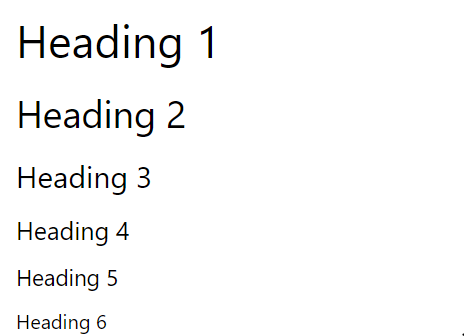
There are six levels of headings <h1> to <h6>.
<h1> defines the most important heading and the fact that it is important is highlighted by its size. h1 headings are the biggest headings.
The importance and size of headings decrease from <h1> to <h6>
h6 defines the least important heading thus has the smallest size.
<h1>Heading 1</h1>
<h2>Heading 2</h2>
<h3>Heading 3</h3>
<h4>Heading 4</h4>
<h5>Heading 5</h5>
<h6>Heading 6</h6>
Why headings are important
- Search Engines index and structure your page through headings.
- Users skim webpages by headings to find appropriate content.
-
<h1>shall be used for main headings,<h2>for sub-headings and so on…
Horizontal Rules hr
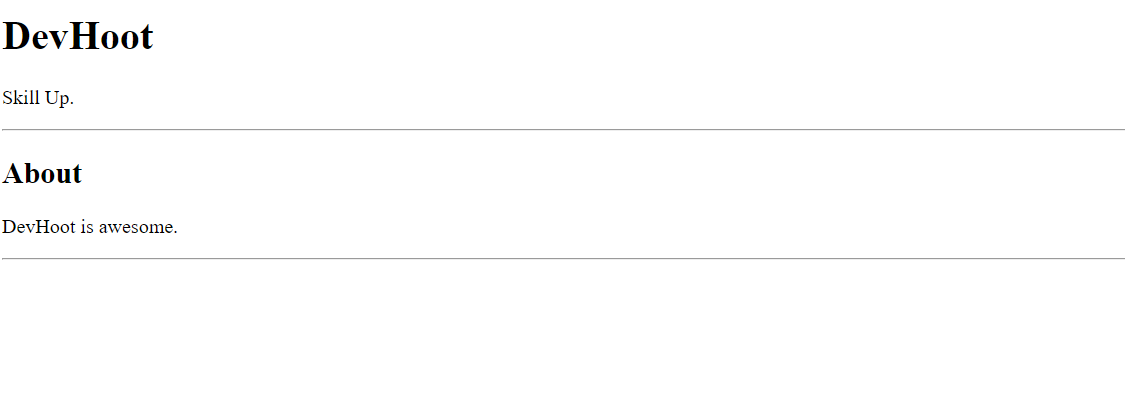
<hr> tag defines a break in html content by displaying a line.
The main purpose of it is to separate content.
<h1>DevHoot</h1>
<p>Skill Up.</p>
<hr />
<h2>About</h2>
<p>DevHoot is awesome.</p>
<hr />
head Element
The <head> element is not a heading.
It contains all the meta data of your site. Meta data means data about data.
<!DOCTYPE html>
<html>
  <head>
    <title>My title</title>
    <meta charset="UTF-8" />
  </head>

  <body>
    . . .
  </body>
</html>
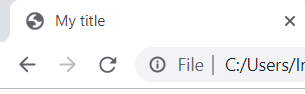
Metadata is not displayed but used by search engines to rank your page.
Metadata defines title, character set, styles, links, scripts & other info.





Comments